
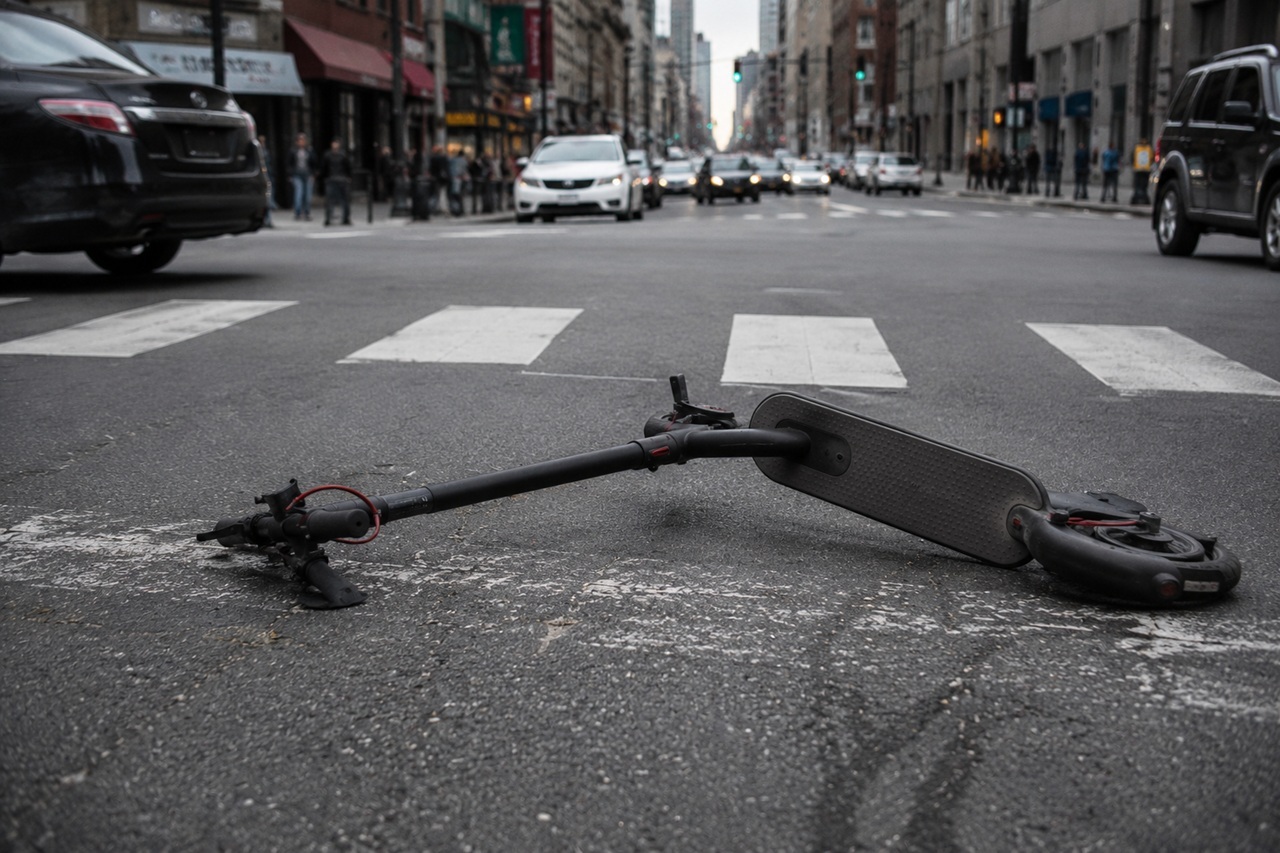
Two teenagers are dead. Millions of scooter trips are being taken across Chicago streets. And only now is the City of Chicago beginning to publicly confront the safety consequences of its rapidly expanding e-scooter program.
According to recent reporting discussed in the City’s new e-scooter safety campaign, Chicago has seen record ridership levels while failing for years to maintain any comprehensive citywide tracking system for e-scooter injuries and fatalities. For vulnerable road users, that lack of accountability matters. When people are seriously injured or killed, the absence of meaningful data often means dangerous roadway conditions and recurring crash patterns remain unaddressed.
At the same time, the City’s messaging continues to focus heavily on rider behavior while often minimizing the critical role motor vehicle drivers play in these collisions. Drivers who speed, turn across bike lanes, block protected lanes, drive distracted, or fail to yield remain one of the greatest dangers facing bicyclists and e-scooter riders throughout Chicago.
That is exactly the kind of problem the Chicago e-scooter accident lawyers at Keating Law Offices have been fighting to address for years.
Chicago’s Rules for E-Scooters
Under the City of Chicago’s current e-scooter sharing rules, e-scooters are subject to several important operating restrictions intended to reduce conflicts with pedestrians and motor vehicles. The City provides that:
- Scooters are permitted to operate only on the City’s bike lanes or bike paths.
- Except as otherwise provided under Section 9-52-020 of the Municipal Code of Chicago, scooters are prohibited from operating on sidewalks.
- Where no bike lane or path exists, scooters may operate on city streets, although the City expressly states those streets are not intended for scooter use.
These rules create a difficult and sometimes dangerous reality for riders. Chicago encourages e-scooter usage and has dramatically expanded scooter availability across the city, yet much of Chicago’s roadway infrastructure still lacks protected bike lanes or safe micromobility corridors. In many neighborhoods, riders are effectively forced into traffic alongside larger and faster motor vehicles.
That danger became tragically clear this spring when two teenage girls, 17-year-old Astrid Alexandra Carrillo Noguera and 15-year-old Violet Harris, were killed roughly one month apart while riding e-scooters on Chicago’s South Side. Both were struck by motor vehicles.
Outside of Chicago, suburban municipalities throughout Illinois are also beginning to confront the rapid growth of e-scooters and other electric micromobility devices. Communities across Cook, DuPage, Lake, and Will Counties have increasingly adopted local ordinances regulating where e-scooters may operate, restricting sidewalk riding, limiting speeds on shared-use paths, and prohibiting use in certain downtown pedestrian areas. Some suburbs have explored outright bans on shared scooter programs, while others have expanded enforcement against riders operating high-powered e-bikes and scooters on sidewalks or crowded recreational trails. Much like Chicago, many suburban communities are struggling to balance the convenience and popularity of micromobility devices with legitimate concerns about pedestrian safety, roadway design, and the growing number of serious crashes involving vulnerable road users. As these local regulations continue evolving, riders should understand that e-scooter laws can vary significantly from one municipality to another, particularly regarding sidewalk use, bike path access, and equipment classifications.
The Legal Reality Behind Chicago E-Scooter Crashes
When an e-scooter rider is seriously injured in Chicago, liability often extends far beyond the rider themselves. Illinois law may allow claims against:
- Drivers who fail to yield, drive distracted, or improperly turn across bike lanes.
- Rideshare or delivery drivers operating Uber, Lyft, DoorDash, or similar vehicles.
- Scooter companies that fail to properly maintain or inspect their equipment.
- Government entities responsible for dangerous roadway design, inadequate infrastructure, potholes, or hazardous conditions.
Like bicyclists, e-scooter riders are vulnerable road users. They have virtually no physical protection in a collision with a motor vehicle. The injuries that result are frequently catastrophic, including traumatic brain injuries, spinal trauma, fractures, internal injuries, and wrongful death.
Chicago Cannot Promote Micromobility Without Protecting Riders
Chicago continues to promote scooters, bicycles, and other forms of micromobility as alternatives to driving. But expanding ridership without building safe infrastructure places vulnerable users at enormous risk.
Protected bike lanes, safer intersection design, meaningful traffic enforcement against dangerous driving, and accountability for companies operating on public roadways all matter. Safety campaigns alone are not enough.
For years, Illinois Bicycle Law has advocated for safer streets, stronger legal protections for vulnerable road users, and accountability when drivers, corporations, or roadway design failures cause preventable tragedies on Chicago streets. When riders are injured, understanding your legal rights under Illinois law can make a critical difference.
If you or someone you love was injured in an e-scooter crash in Chicago, it is important to preserve evidence, document roadway conditions, and speak with an attorney familiar with bicycle and micromobility litigation as soon as possible.
"I was worried that being on a scooter would be an issue. But with my dashcam and trusting the firm. I was no longer panicked about all these bills and legal issues. I'm glad to be compensated! Hoping Chicago becomes a better bike city. Glad to have Keating around. I would refer anyone to them." - Lachesis, ⭐⭐⭐⭐⭐