
New Statewide Requirements Take Effect January 1, 2027
Electric Bicycles help people get to work, run errands, and enjoy riding throughout Chicago. But a bicycle with modest pedal assistance and a powerful electric device capable of motorcycle speeds present very different safety and legal questions. Calling both an e-bike does not make them the same vehicle under Illinois law.
Governor JB Pritzker signed Senate Bill 3484, Public Act 104-0854, on August 26, 2026. The new micromobility requirements take effect January 1, 2027. Riders and parents should understand the classification of the device they are using, the age requirements, and where it can lawfully be ridden.
The Illinois Secretary of State's Micromobility in Illinois guidance explains the new requirements and provides safety rules and recommendations for riders, motorists, and pedestrians. The changes preserve the three-class e-bike system while addressing faster and more powerful devices. Understanding both the vehicle rules and the duties of other road users is essential to safer streets.
Those details can also matter after a collision. An insurance company may question the rider's equipment or conduct. That does not relieve a driver of responsibility for failing to yield, opening a door unsafely, or turning across a bicyclist's path.
Illinois Keeps Three Classes of Low-Speed Electric Bicycles
Qualifying low-speed electric bicycles have operable pedals and motors within the statutory power limit. Their classes distinguish how the motor assists the rider and when that assistance stops.
- Class 1: Pedal assistance that stops at 20 miles per hour.
- Class 2: A motor that can propel the bicycle without pedaling, with assistance stopping at 20 miles per hour.
- Class 3: Pedal assistance that stops at 28 miles per hour.
The assistance cutoff is not permission to ride that fast regardless of conditions. Bicyclists must account for traffic, visibility, people walking, and the road surface. Read the manufacturer's specifications and keep the identifying label, manual, and purchase records.
Modifications can change a device's legal classification. A throttle setting, controller change, or motor upgrade may matter more than the name on the frame. A device that does not satisfy the low-speed bicycle definition requires a separate examination of the applicable vehicle category and requirements.
New Age Requirements for Riders and Passengers
Beginning January 1, 2027, Class 1 and Class 2 operators must be at least 15. The minimum age for operating a Class 3 bicycle remains 16.
The amended law also addresses carrying passengers. An operator under 18 may not carry a passenger on a low-speed electric bicycle manufactured for passengers unless the passenger is the operator's sibling, stepsibling, child, or stepchild. A younger passenger on a Class 3 bicycle must be riding a bicycle designed to accommodate passengers.
Parents should check the actual device and the applicable rules before allowing a child to ride. Permission from a parent does not override a statutory age requirement. Rental operators can also impose their own eligibility restrictions.
When Licensing and Motor Vehicle Insurance Are Required
A qualifying Class 1, 2, or 3 low-speed electric bicycle does not require a driver's license, vehicle title, registration, or mandatory motor vehicle liability insurance simply because it has electric assistance.
Higher-powered electric devices classified as motor-driven cycles are different. The Secretary of State explains that covered higher-speed devices require licensing, titling, registration, and insurance, with riders at least 16. Check the classification rather than assuming that pedals make the device a bicycle.
A modification or a device advertised as capable of traveling beyond the low-speed classes warrants particular attention. Before buying or changing a device, confirm the requirements with the Secretary of State and the applicable statutory definitions.
Where Electric Bicycles and Scooters Can Be Ridden
Qualifying low-speed electric bicycles remain permitted on bicycle-authorized streets and bicycle lanes. Bicycle-path access can be restricted by agencies with authority over a particular path, including specified park, forest preserve, conservation, and transit districts. Check the rules for the route you intend to use.
Low-speed electric bicycles are prohibited on sidewalks. The new law also prohibits covered electric micromobility devices, including electric scooters, skateboards, and unicycles, on sidewalks. A paved sidewalk is not automatically a designated bicycle path.
Beginning January 1, 2027, electric scooter operators must be at least 16. The new framework limits covered micromobility devices to 28 miles per hour in operation; on roads posted above 35 miles per hour, the Secretary of State explains that those devices may be used only where there is a bicycle lane. The device category and route restrictions still matter.
The Secretary of State Highlights Three Key Changes
In its New Legislation section, the Secretary of State identifies the following requirements taking effect January 1, 2027:
- Class 1 and Class 2 e-bike operators must be at least 15 years old. The existing Class 3 minimum remains 16.
- Riders of e-bikes and e-motos capable of traveling over 28 miles per hour must meet driver licensing, title, registration, and insurance requirements. These devices should not be treated as ordinary low-speed electric bicycles.
- High-speed micromobility devices such as electric scooters, electric skateboards, and electric unicycles may not be operated over 28 miles per hour, and their operators must be at least 16. The speed limit does not authorize riding on an otherwise prohibited sidewalk or route.
The state describes the law as an effort to make device classifications and requirements more consistent throughout Illinois. Specific statutory exceptions and restrictions for particular paths still need to be checked. A product listing or a retailer's description does not replace the legal requirements.
Safety Guidance for Bicyclists and Micromobility Users
The Secretary of State also emphasizes the everyday conduct that helps prevent collisions. Riders should obey applicable traffic laws, signs, and signals; travel in the same direction as traffic; and use hand signals to communicate turns. At night, use a front light and rear reflector.
The guidance advises riding as close to the right edge as is safe and avoiding the door zone beside parked vehicles. The words "as is safe" matter. A rider should not be forced into an opening car door, debris, or another hazard simply to leave more space for a motor vehicle. The applicable law and roadway conditions determine proper positioning.
Motorists Must Give Riders Room and Check Before Turning
Allow at least three feet when passing a bicyclist. The Secretary of State explains that this clearance is required by law and recommends more space at higher speeds. A close pass can leave a rider with no room to react to a pothole, debris, or an opening door.
Look for riders before opening a door. The guidance recommends the Dutch Reach: use the hand farthest from the door to reach across and open it, helping turn your body toward approaching traffic. This technique supports the legal duty to check that opening the door is safe; it does not replace that duty.
Respect bicycle lanes. The Secretary of State instructs drivers not to drive, park, or stand in a bike lane even when no bicyclist is visible, and to wait for bicyclists to pass before crossing the lane to park. Drivers must also follow the applicable rules for lawful access and crossings. A pickup or drop-off does not excuse blocking bicycle traffic.
Check for riders before turning. Drivers should yield as required and avoid underestimating a bicyclist's speed. Look for oncoming bicycle traffic before turning left. Do not pass a bicyclist and then cut across the rider's path to turn right.
Expect riders outside bicycle lanes. The Secretary of State recognizes that a bicyclist may need to ride outside a lane. Drivers should be prepared to pass safely rather than assume that being outside the lane makes the rider responsible for a collision.
Reminder to Check Traffic Before Crossing
The Secretary of State recommends stopping before leaving a driveway or sidewalk, checking left, right, and left again before crossing, continuing to watch traffic while crossing, and following pedestrian signals. These precautions help people share the road; they do not excuse a driver's failure to yield when the law requires the motorist to give a bicyclist the right of way.
A Rider Rule Violation Does Not Decide Who Caused a Crash
After a collision, an insurer may claim the bicyclist was too young, using the wrong device, or riding in a prohibited location. Those allegations require evidence. A technical violation is not the same as proof that the rider caused the collision.
Illinois generally allows an injured person who is 50 percent or less at fault to recover reduced damages. A person more than 50 percent at fault is generally barred from recovering in a negligence action. The connection between the conduct and the injury matters.
For example, a driver's failure to look before turning across a bike lane must be investigated even if the driver questions the bicycle's advertised speed. The relevant evidence includes actual speed, sight lines, traffic signals, and the opportunity to avoid the collision. Requirements effective in 2027 should not simply be applied to an earlier crash.
Drivers Must Respect Electric Bicyclists
A driver cannot turn a bicycle lane into a passenger loading zone. Blocking the lane can force a rider into traffic, and opening a door into an approaching electric bicyclist's path can cause serious injury. Our IllinoisBicycleLaw.com article on Uber and Lyft Doorings explains Chicago's training on safe pickups and drop-offs. Illinois Vehicle Code Section 11-1407 and Chicago Municipal Code Section 9-80-035 require safe door opening without interference with moving traffic. Chicago Section 9-40-060 also restricts bicycle-lane obstruction. An injured bicyclist's claim rests on the duties owed to the bicyclist, proof of causation, and damages, including medical expenses, pain and suffering, and loss of a normal life.
Preserve the Bicycle and the Evidence
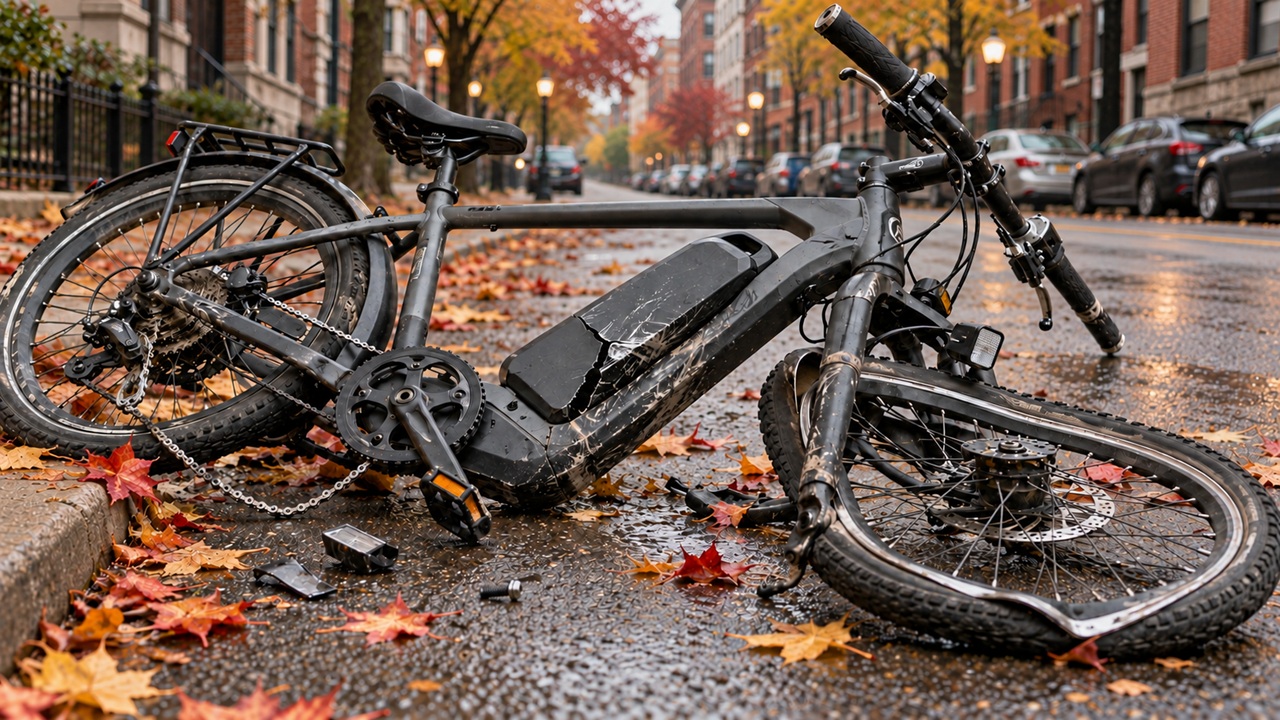
Get medical care and address immediate safety first. When possible, preserve the damaged bicycle and its motor, controller, and labels before repairs or disposal. Keep purchase records, manuals, modification records, ride data, rental receipts, and app information.
Photographs of the scene, bike lane, signals, vehicles, and damage can help establish what happened. Obtain witness contact information and identify nearby cameras. An attorney can seek evidence the rider cannot access alone, including rideshare records when relevant. Early action matters because video can be overwritten and damaged equipment discarded.
Legal Help for Injured Chicago Bicyclists
Keating Law Offices advocates for injured bicyclists in Chicago and throughout Illinois. Our work focuses on the conduct that caused the collision and the effect of the injuries on the rider's life. A question about an e-bike's classification should not prevent an injured person from seeking answers.
Contact Us for a free consultation with no obligation. There is no attorney fee unless we recover compensation. The representation agreement explains case costs and other terms. Don't spin your wheels. Get Keating.
Client Experience
"Mike and his team went above and beyond in working to settle my case after I was hit by a car while biking. I am legitimately shocked at the outcome (to the positive) after a lot of hard-fought battles by the Keating team. A lot of firms would have settled earlier, and I am incredibly grateful that they continued to fight for me. I hope that you never have to be involved in a motor vehicle collision, but if you happen to be, I cannot recommend them more." — Stephen F., ⭐⭐⭐⭐⭐
Past results and client experiences do not guarantee a similar outcome. Every case depends on its own facts.